

Social Communication Groups
Small-group communication support for middle school students building conversation, friendship, and real-world social communication skills.
Real conversations. Real connections. Real-life practice.
Social communication is about much more than knowing what to say. It involves reading social situations, joining conversations, understanding others' perspectives, problem-solving with peers, and building meaningful relationships.
McQueen Speech Collective's Social Communication Groups provide a supportive, structured environment where middle school students can practice these skills alongside peers while receiving guidance from a licensed speech-language pathologist.

What We Work On
initiating and joining conversations
maintaining back-and-forth conversations
perspective taking
reading social cues
flexible thinking
problem-solving with peers
friendship skills
self-advocacy
Topics are introduced through structured activities while allowing plenty of opportunities for authentic peer interaction.
Group Format
Small groups of 4-6 students
Middle school-aged participants
Approximately 60 minutes
Convenient weekend and evening meeting times
Held in community settings throughout the Charlotte area
Led by a licensed speech-language pathologist
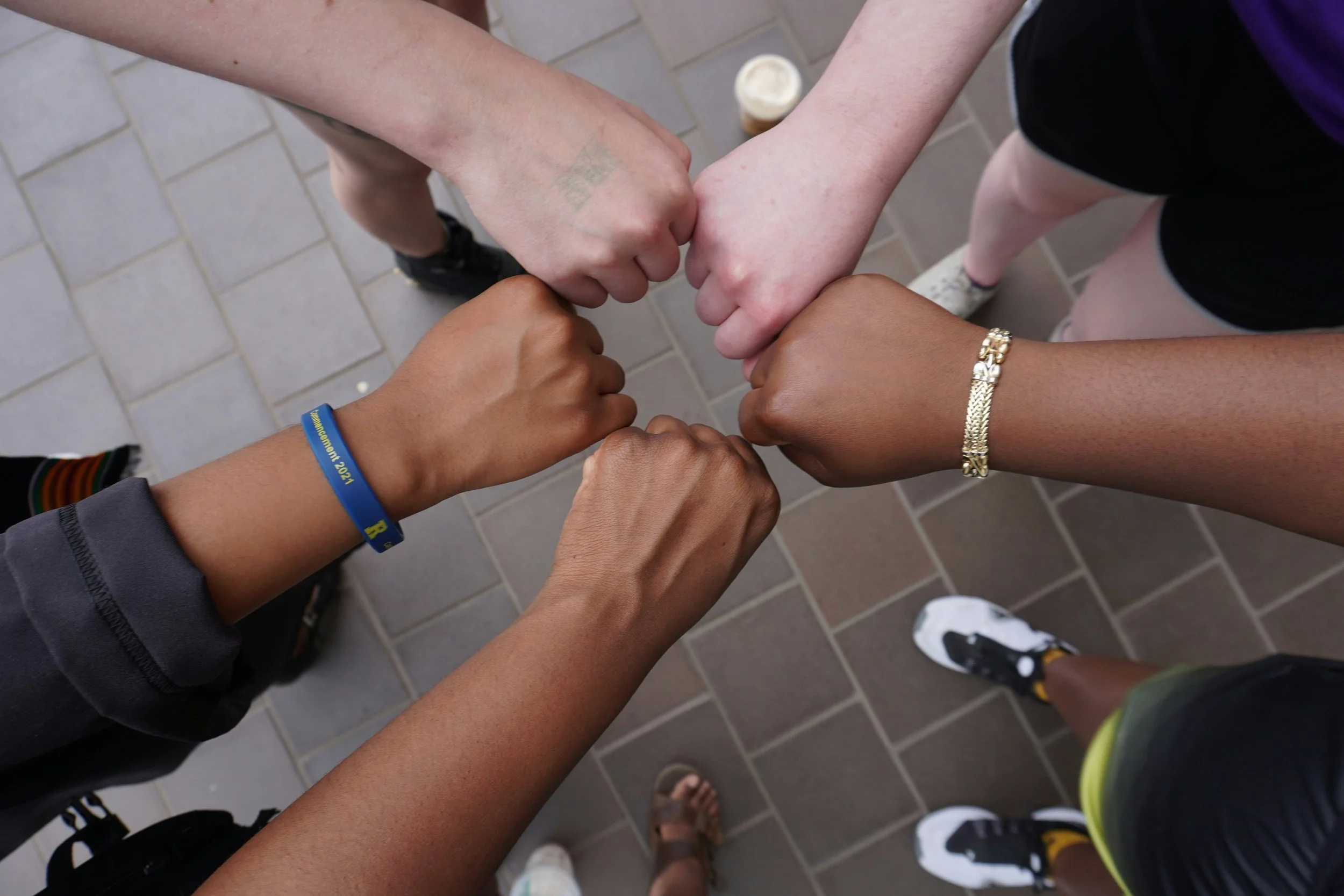
Why Group Therapy?
Many social communication skills are best learned through authentic peer interaction. Group sessions provide opportunities to:
practice conversation naturally
receive immediate feedback
develop confidence
build friendships
learn in authentic social situations
Parents are encouraged to drop students off so they can participate as independently as possible while still receiving professional guidance and support.
Is This Group Right for My Child?
These groups may be a good fit for students who:
have difficulty making or maintaining friendships
struggle to initiate or maintain conversations
miss social cues
have pragmatic language differences
would benefit from practicing communication in a peer setting
Learn More About Our Social Groups
-
No, these groups are designed to provide structured practice in a small-group setting and are not intended to replace individualized speech-language services.
-
Groups typically include 4-6 students to encourage meaningful interaction while allowing individualized support.
-
Groups begin once a minimum of four students are enrolled. After joining the interest list, you'll be notified as soon as a cohort is ready to begin, along with upcoming start dates and enrollment details.
-
Groups are held at community locations throughout the Charlotte area, such as public libraries or other convenient meeting spaces.
-
Groups are offered in 8-week cohorts, meeting once a week for 60 minutes. Each cohort follows a structured curriculum while allowing flexibility to address the unique needs and interests of the group.
-
The investment for each 8-week cohort is $200 per student and includes all materials, weekly group sessions, and resources to support carryover at home.